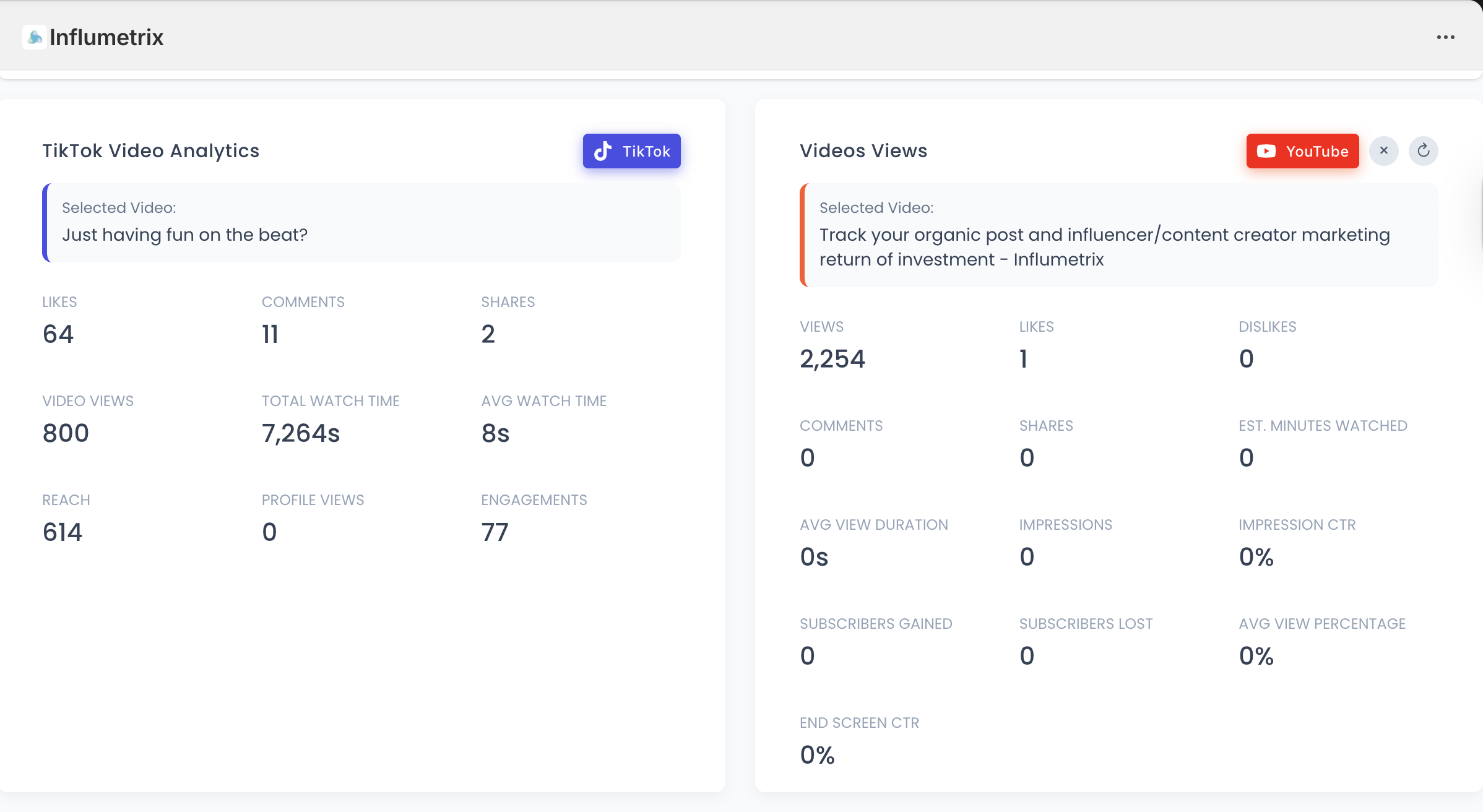
Picture this scenario:
You’ve just spent $1,000 sending products to five different TikTok micro-influencers. You spent hours vetting them, negotiating rates, and shipping packages.
A week later, the posts go live. The notifications start rolling in.
15,000 views.
2,500 likes.
150 comments saying "Need this! 😍"
You feel great. It’s a viral success.
Then, Monday morning comes around. Your CEO or client asks the inevitable question:
"That looks great. But how many sales did it generate?"
You log into your Shopify dashboard. You look at the sales for the week. You see a slight bump, maybe, but you can’t prove where it came from. Was it the TikTokers? Was it your email newsletter? Was it just a random Tuesday?
You have no idea. You have 15,000 views and $0 in provable ROI.
If this sounds familiar, you are trapped in the "Vanity Metric Cycle." Here is why it’s happening and how to break free.
The Problem: The Great Disconnect
The fundamental flaw in most modern marketing strategies is the disconnect between Activity Data and Sales Data.
Activity Data lives in silos: Instagram knows how many likes you got. TikTok knows how many shares you got. Your blog knows how many readers you have.
Sales Data lives in another silo: Shopify or WooCommerce knows how much money you made.
The problem is that these silos do not talk to each other by default.
When an influencer posts about your product, a customer might view it, close the app, go to Google three hours later, search for your brand, and buy.
Standard analytics tools will attribute that sale to "Organic Search" or "Direct Traffic." The influencer gets zero credit. You assume influencer marketing "doesn't work," and you cut the budget for the only thing that was actually driving demand.
Vanity Metrics vs. Actionable Metrics
To fix your ROI, you need to stop reporting on vanity metrics.
Vanity Metrics make you feel good, but don't pay the bills:
Follower count
Likes and Hearts
Video Views
Link Clicks (without purchase data)
Actionable Metrics tell you if your business is growing:
Cost Per Acquisition (CPA) by Channel
Revenue generated per specific influencer post
Conversion rate from blog readers to free trial users
If your monthly marketing report is full of the first list and empty of the second, you are flying the plane blindfolded.
The Fix: Marketing Attribution
The bridge between activity and sales is called Marketing Attribution.
Attribution is the science of assigning credit for a sale to the different marketing touchpoints that a customer interacted with.
Until recently, true multi-channel attribution was expensive, complicated, and reserved for enterprise companies with data science teams. Small brands and agencies were stuck using spreadsheets and UTM codes that broke half the time.
But the game has changed.
You no longer need to guess if that $500 TikTok collaboration worked. You need a system that connects the API of the social platform directly to the API of your checkout cart.
When you have proper attribution, the conversation changes from "I think this worked" to "I know influencer A drove $1,250 in sales, while influencer B only drove $200."
That is when marketing stops being a cost centre and starts being a profit engine.
Ready to stop guessing?
If you are tired of reporting on "views" and want to start reporting on revenue, you need Influmetrix. We connect your social media channels, influencer campaigns, and content directly to your sales data in one dashboard.