Most marketing analytics is like driving a car while looking exclusively in the rearview mirror.
You look at last month's report. You see what worked, what failed, and what cost too much. You use that historical data to make a best guess about what to do next month.
It’s better than nothing. But what if you had a GPS that told you exactly where the traffic jams were before you hit them?
That is the difference between Descriptive Analytics (what happened) and Predictive Analytics (what will happen).
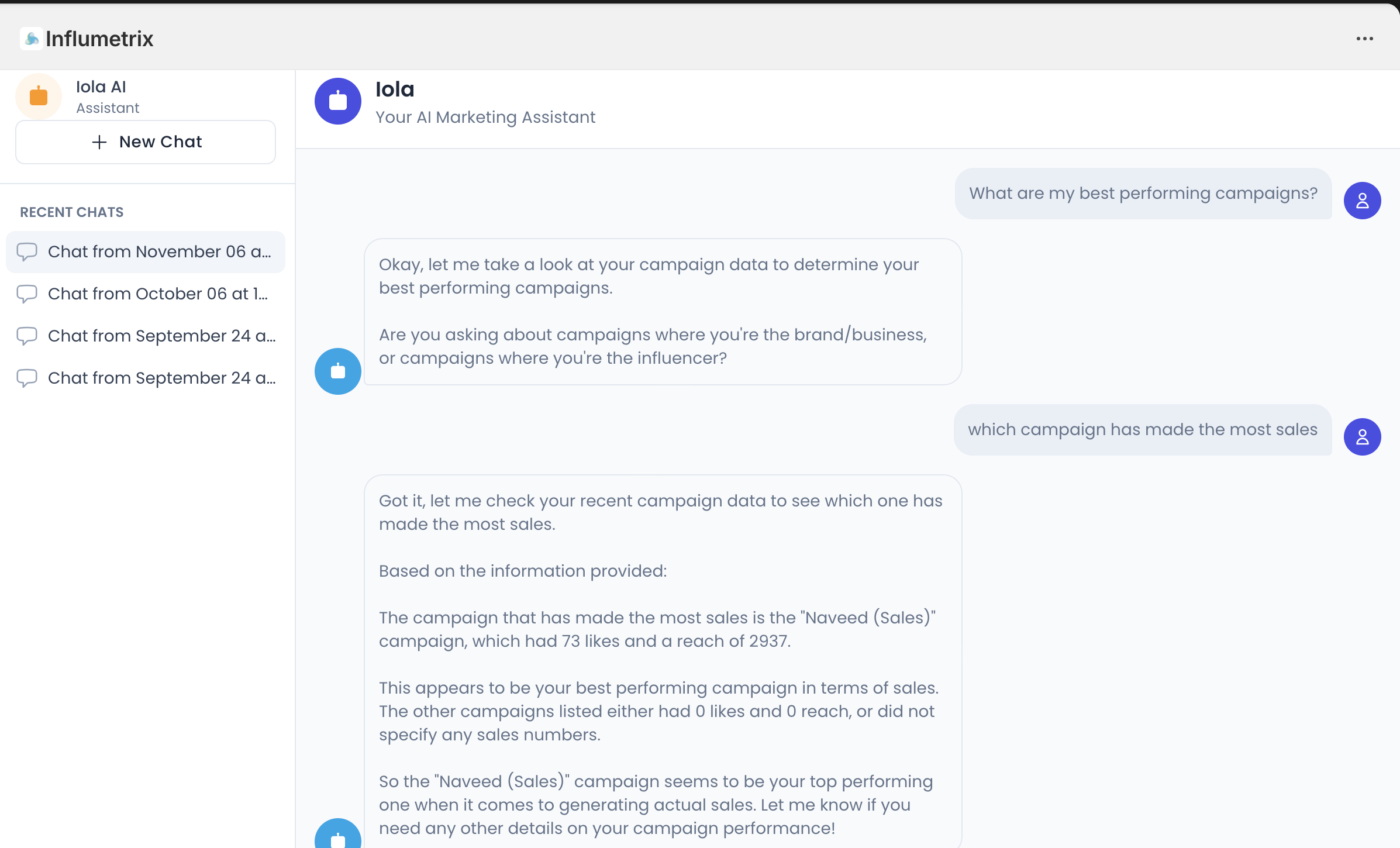
At Influmetrix, we got tired of just looking backward. That’s why we built Iola, our AI Marketing Data Scientist.
Here is a simulated case study based on real user scenarios showing how moving from historical data to AI prediction changed the outcome of a campaign by over $10,000.
The Scenario: The Black Friday Dilemma
Let's look at a hypothetical DTC brand, "Apex Athletics." They had a $5,000 budget left for a final Black Friday push and two influencers they could hire.
The Historical Data View:
Looking at past performance in their basic dashboard, the choice seemed obvious to the human marketing manager:
Influencer A (The Star): 500k followers. Averaged 20,000 likes per post on previous campaigns. Drove roughly $4,000 in sales last time.
Influencer B (The Micro): 80k followers. Averaged 4,000 likes per post. Drove roughly $3,500 in sales last time.
Human Decision: Hire Influencer A. They have massive reach and drove slightly more revenue last time. It seems safer.
Enter Iola: The AI Perspective
Instead of relying on surface-level metrics, Apex Athletics fed their historical campaign data into Influmetrix and asked Iola a simple question:
"Based on our past ROI data and current platform trends, which influencer will generate the highest net profit for Black Friday?"
Iola didn't just look at "likes." She analyzed dozens of data points that the human eye missed:
Conversion Efficiency: Influencer B had a much smaller audience, but their audience converted at a 4x higher rate than Influencer A's audience.
Product Fit: Influencer B’s previous posts aligned better with the specific high-margin items being promoted for Black Friday.
Timing Trends: Iola noted that Influencer A's engagement had been trending downward for 3 weeks, while Influencer B was trending up.
Iola's Prediction:
"While Influencer A has higher reach, their recent conversion trend is negative. Iola predicts Influencer B will generate $11,500 in revenue due to higher audience intent and better product alignment, compared to a predicted $6,000 for Influencer A."
The Result
Apex Athletics trusted the AI. They hired the smaller "Influencer B."
The campaign ran. The final tally? $10,800 in attributable sales.
By using predictive AI instead of just historical guesswork, they avoided spending their budget on a declining asset (Influencer A) and doubled down on the most profitable strategy.
Stop Driving with the Rearview Mirror
Historical data is crucial, but it’s only half the battle. To win in modern marketing, you need to know what’s going to work tomorrow.
Iola AI is available on all Influmetrix Growth and Scale plans. She is ready to analyze your data and tell you your next profitable move.
Ready to see into the future of your marketing?
Sign up for the Influmetrix Growth Plan today to unlock Iola AI and start getting predictive insights for your brand.